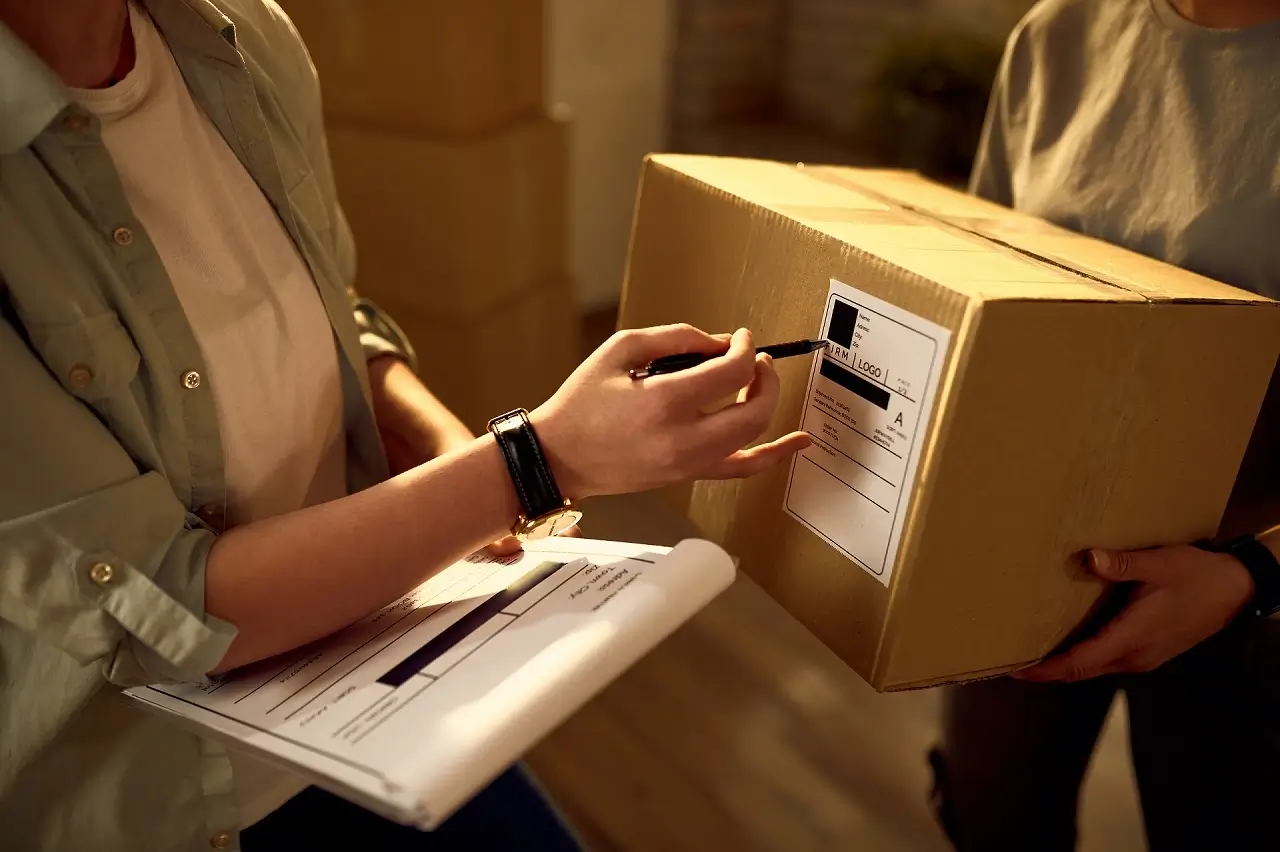
A proof of delivery — POD — is the signed document confirming that freight arrived, when it arrived, and in what condition. It is the difference between an invoice that clears and one that sits in a customer's disputed pile for ninety days. It is also, when something goes wrong, the only evidence either side really has.
What is POD in shipping?
POD stands for proof of delivery — the signed document confirming that freight arrived, when it arrived, and in what condition. In shipping and logistics it is the record that closes the delivery, and the document a carrier bills against.
What has to be on a proof of delivery?
A POD that will actually survive a dispute carries all of this:
- Date and time of delivery — not just the date. Detention claims are argued in hours.
- Delivery address as actually delivered, which is not always the address on the order.
- Piece count received, counted at the tail of the truck, not copied from the paperwork.
- Condition notes — damage, shortage, wet cartons, crushed corners.
- Printed name and signature of the person receiving. A signature nobody can read, with no printed name beside it, is worth very little.
- Reference numbers — PO, BOL, load or container number — so it can be matched to the shipment without a phone call.
Clean vs claused: the phrase that decides who pays
A clean POD is signed with no exceptions noted. It says: everything arrived, in good order, in the count stated. Once your customer signs clean, arguing later that three cartons were missing is close to impossible.
A claused or exception POD notes what was wrong at the moment of delivery — "2 cartons crushed", "short 1 pallet", "seal broken on arrival". That note, written before the driver leaves, is what makes a claim payable.
This is the part receiving clerks get wrong most often. Signing clean because the driver is in a hurry, and calling about damage the next morning, hands the carrier a complete defence. The count and the condition have to be recorded while the truck is still at the dock.
Paper, ePOD and the photo that settles it
Electronic PODs — captured on a driver's phone with a timestamp, a GPS position and photographs — have quietly become the standard, and for good reason. A paper POD proves a signature. An ePOD with four photographs of the pallet as it came off the truck proves condition, and condition is what gets argued about.
Our drivers capture delivery photos and a signature in the app, and the record lands against the load automatically. It is not there to be modern. It is there because "it was fine when it left us" is not an argument you win without pictures.
Why billing depends on it
We do not send a customer invoice without a matching POD on file. That is a firm internal rule, not a preference, and it exists because of what happens otherwise: the invoice goes out, the customer's AP department cannot match it to a receipt, it goes into a query queue, and forty-five days later somebody starts an email thread that could have been prevented by one attached document.
Consistent PODs shorten the gap between delivering freight and being paid for it. That is the whole business case.
The POD is also your claim clock
Freight claims run on deadlines, and the POD usually starts them. Concealed damage — the kind you only find when the shrink wrap comes off — generally has to be reported within a few days of delivery, and the delivery date on the POD is the date that counts. Without a POD nobody agrees when the clock started, which in practice means the claim is dead.
Practical habits that make PODs hold up
- Count against the BOL at the tail of the truck, before anything moves into the building.
- Note exceptions in writing on the document, and have the driver initial them.
- Photograph anything unusual — including the seal, before it is cut.
- Get a printed name next to every signature.
- File the POD against the shipment reference the same day, not at month end.
We run receiving, storage and outbound as one set of warehousing services from a single Kent Valley facility, so the count that goes on the POD is the count that goes into inventory. See also our guide to the bill of lading, the document a POD is matched against.