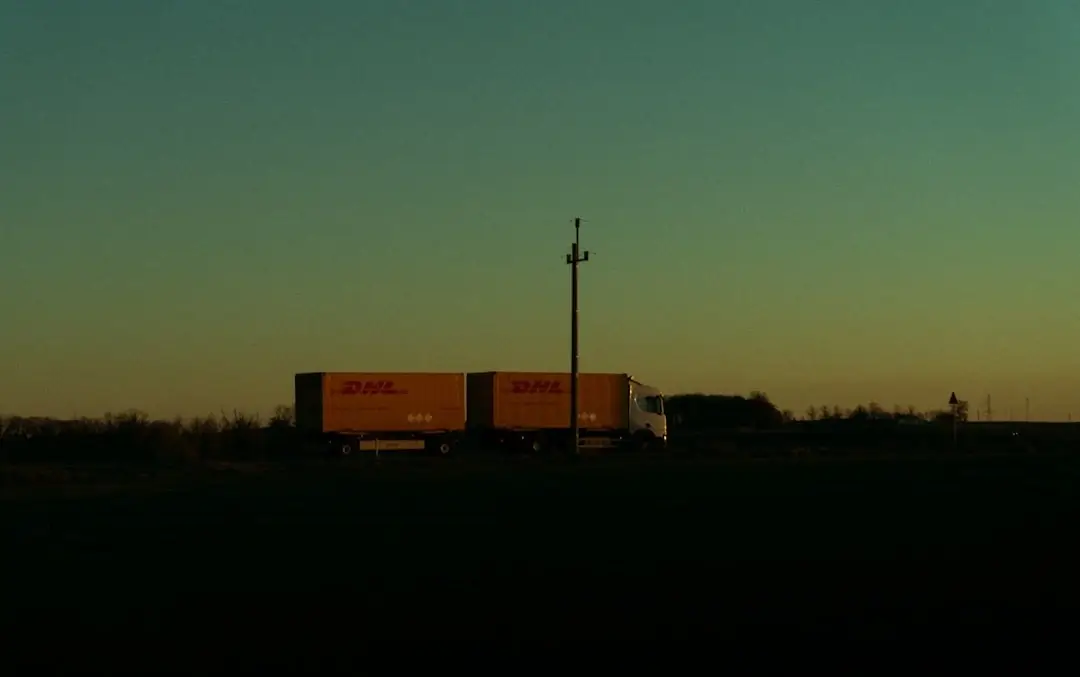
You have probably followed one for a mile without knowing it had a name. The delivery truck with the box built right onto the cab — no gap, no separate trailer, one solid vehicle from bumper to back door. That is a straight truck, and if your freight ever moves the last few miles to a store or a house, it almost certainly rides on one.
What is a straight truck?
A straight truck is a vehicle whose cargo box is built onto the same frame as the cab — one solid unit from bumper to back door, with no separate trailer. Box trucks and most local delivery trucks are straight trucks.
What makes a truck "straight"
The word describes the frame. On a straight truck the cab, the engine and the cargo box all sit on a single rigid chassis. Nothing bends in the middle. Compare that to a tractor-trailer, where a separate tractor hooks to a separate trailer and the two pivot at the coupling — that is an articulated truck, the kind you see jackknife in winter crash footage. A straight truck cannot jackknife, because there is no joint to fold.
You will hear the same vehicle called a box truck, a cube truck, a cube van, a bobtail, or a straight truck depending on who is talking and where they learned the trade. They mean roughly the same thing. "Box truck" leans toward the smaller end used for delivery and moving; "straight truck" is the freight world's term and stretches up to the big 26-footers. Under the skin it is one idea.
The 26,000-pound line that explains everything
Here is the single fact that makes sense of the whole category. In the United States, a truck with a gross vehicle weight rating of 26,001 pounds or more needs a driver with a commercial driver's license. At 26,000 and under, an ordinary license will do — no CDL, as long as there is no hazmat placard and no busload of passengers involved.
So truck builders park a huge share of straight trucks right underneath that ceiling. The classic 26-foot box truck is built to a 26,000-pound rating for exactly one reason: it is the largest truck a company can hand to a driver who does not hold a CDL. That is why they are everywhere, why they are the backbone of local delivery and moving fleets, and why "non-CDL box truck" is a phrase every dispatcher knows. The tape measure follows the law, not the other way around.
Where a straight truck beats a semi
A 53-foot tractor-trailer carries far more freight per trip. It also cannot get down a lot of the streets your customers actually live and work on. The straight truck wins in the places the big rig loses:
- City and residential delivery. Tighter turning, no trailer swing, and it fits where a 70-foot combination simply does not.
- The last mile. Furniture, appliances, equipment — the final leg to a doorstep or a small store almost always ends on a straight truck, usually one with a liftgate for places that have no dock.
- Smaller, frequent loads. When you are moving a few pallets to twelve stops, not a full trailer to one, the smaller truck is cheaper to run and easier to route.
- No-dock deliveries. A liftgate on the back lowers freight to the ground, so the receiver needs nothing but a pallet jack and a flat surface.
The trade-off is capacity. Load a 26-footer and you are done at roughly twelve pallets and ten thousand pounds; the same freight might be a third of a 53-foot trailer. Which vehicle is right is a math problem, not a preference — how much freight, how many stops, how tight the streets, whether there is a dock at the other end.
How it fits into a real shipment
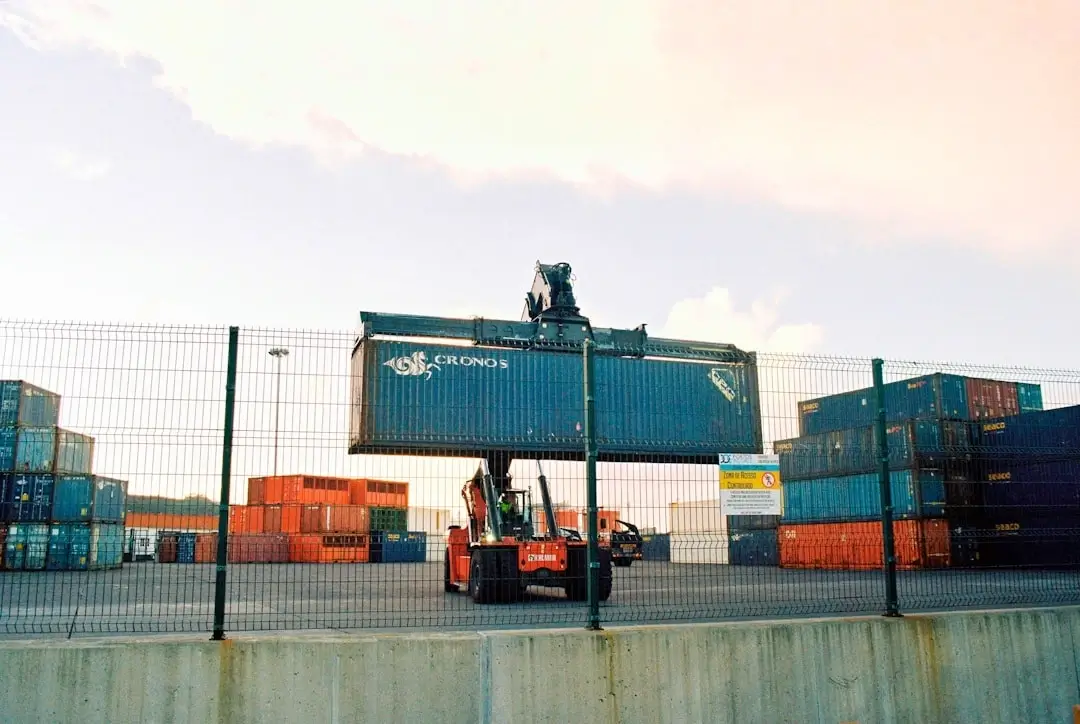
Most freight does not spend its whole life on one kind of truck. A container comes off a ship, gets pulled by a drayage tractor, lands at a warehouse, and then the goods break down into store-sized or customer-sized loads that leave on straight trucks. The big equipment moves the long, dense middle; the straight truck handles the scattered ends. That hand-off is most of what a distribution center exists to manage.
It also decides your freight class and your cost, because a straight-truck delivery to a business with no dock triggers accessorials — liftgate, residential, limited-access — that a dock-to-dock semi load never sees. Worth knowing before you quote, not after; the mechanics are in freight class explained.
We load straight trucks off our dock in Kent, WA every day — outbound LTL and local delivery from freight that arrived by container, staged and picked in between. If you know the delivery ends somewhere a 53-footer can't go, tell us up front and we will build the load for the truck that can. Next question most people have is which size — that's the box truck sizes guide.