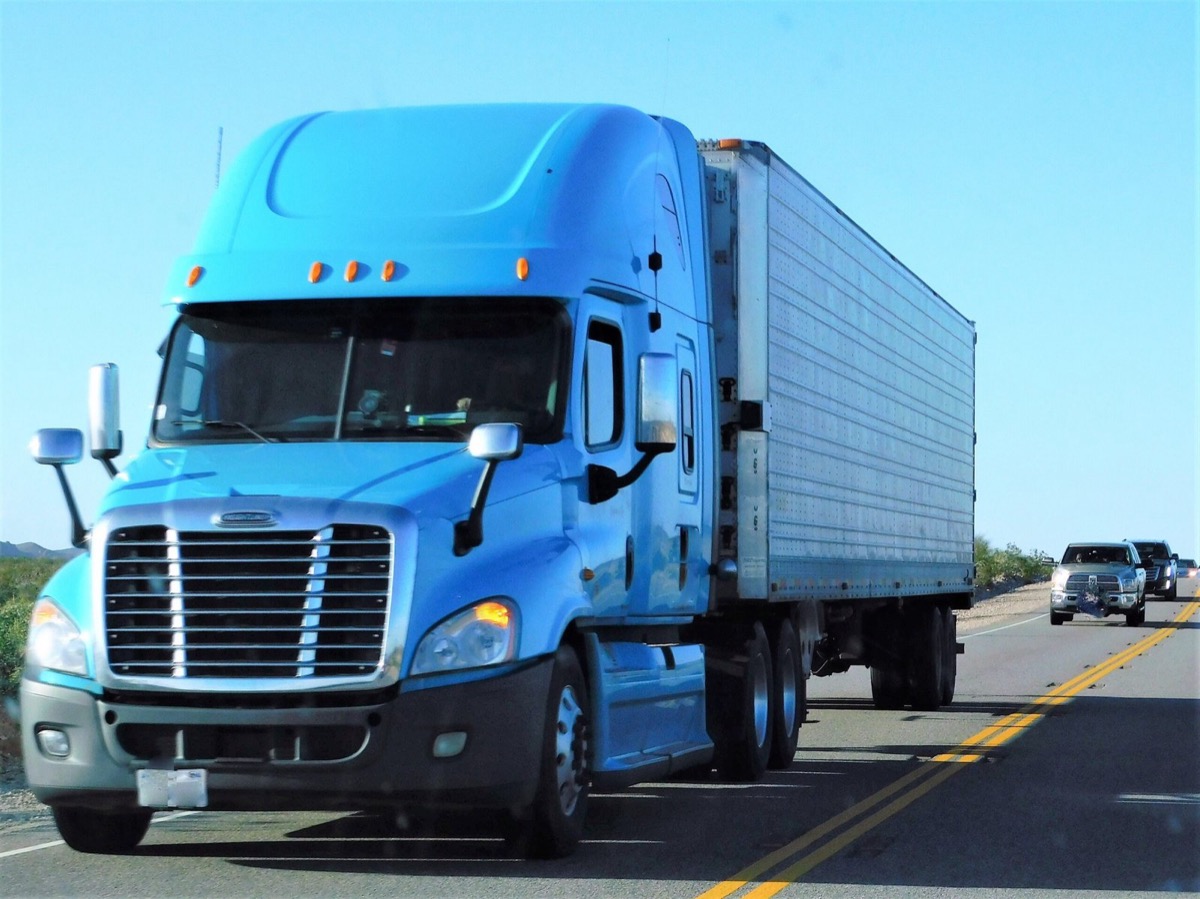
A truck that dies in the Kent Valley does not just cost you a repair bill. It costs the terminal appointment you booked three days ago, the dock slot your warehouse team held open, and — if there is a container involved — free days you cannot get back. The repair is usually the cheapest part of the day.
That is why mobile road service matters more here than almost anywhere else in Washington. The Kent Valley moves an enormous amount of import freight through a small number of corridors, and a single unit down on the shoulder of SR-167 backs up a whole schedule.
Road service, and what it really covers
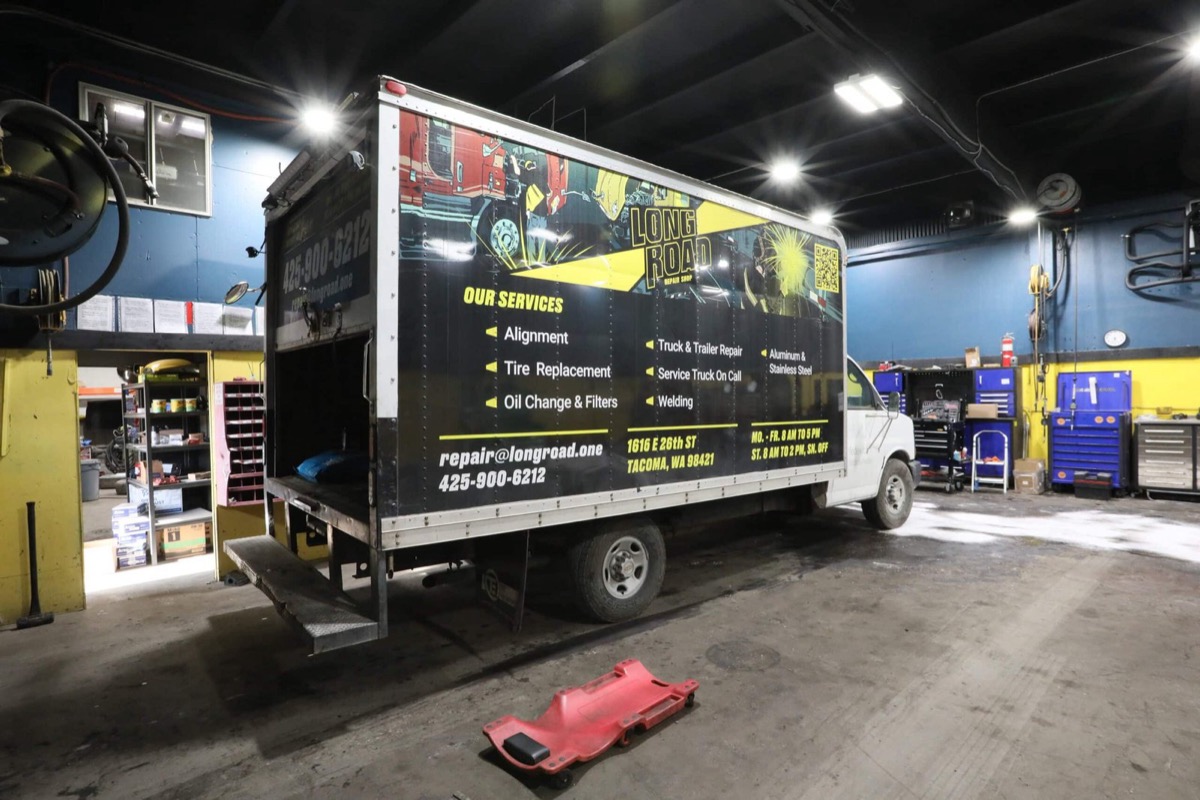
Our partner shop Long Road Repair runs mobile road service out of Kent, WA and roughly 30 miles around it — which in practice means Auburn, Renton, Tukwila, Federal Way, Des Moines, SeaTac, Fife, Sumner, Puyallup, Algona, Pacific, Milton, Enumclaw, most of South Seattle and a good share of Tacoma. If your yard, your customer's dock or the shoulder you are sitting on is inside that ring, the service truck comes to you.
The part people underestimate is the equipment list. This is not a tire-only truck. Road service covers:
- Tractors — air systems, electrical, batteries, starters, fuel, cooling, DPF and DEF faults, no-starts.
- Trailers and chassis — brakes, air bags, suspension, lights, ABS, landing gear, king pins.
- Tires — steer, drive, trailer and chassis positions, on-site replacement.
- Reefer units — a temperature alarm at 2 a.m. is a cargo-loss event, not a maintenance item.
- Liftgates — the single most common reason a delivery truck cannot finish its route.
- Yard equipment — yard trucks, forklifts and other material-handling machines that never leave the property.
- Welding and body work — cracked frames, mounts, brackets and rails handled on site.
Why on-site beats towing more often than you think
The instinct when something breaks is to call a tow. Sometimes that is right — a blown engine or a bent frame belongs in a shop. But a large share of roadside failures are air leaks, electrical faults, batteries, tires, sensors and liftgate hydraulics, and every one of those is a one-to-three-hour on-site job.
A tow adds hook-up time, transit time, a queue at the shop, and then a second move to get the unit back into service. On a drayage move with a live container, that difference is frequently the difference between returning the box inside your free days and paying per diem for a week. We wrote about how that clock works in our guide to Last Free Day, demurrage and per diem.
What to have ready when you call
Road service goes faster when the first phone call is a good one. Have this in hand:
- Exact location — cross streets, mile marker, or a dropped pin. "Near the port" is not a location.
- Unit number, year, make and model, plus engine make if you know it.
- What actually happened, in plain words: what you heard, what you saw, what lit up on the dash.
- Whether the unit is loaded, and whether the load is temperature-controlled or hazmat.
- Whether the truck is in a safe position or in a live traffic lane — that changes the priority.
The fault codes matter too. If the dash threw a code, read it out. A tech who knows the code before rolling brings the right part on the first trip instead of the second.
How this fits with your warehousing
If your freight moves through the Kent Valley, keeping trucks, chassis and yard equipment running is part of the same problem as keeping inventory moving. Our facility sits in the middle of that ring, and short lanes to Seattle and Tacoma only help if the equipment on those lanes is healthy.
Long Road Repair handles mobile road service across Kent and the surrounding 30 miles for trucks, trailers, chassis, reefers, liftgates and yard equipment. Reach them at (425) 900-6212 or repair@longroad.one, or see their mobile truck repair service. For warehousing, drayage and fulfillment in the same corridor, request a quote from Long Road Warehouse.