Every defective unit that reaches a customer costs three times: the refund, the return freight, and the review that outlives both. Quality control in a warehouse exists to make sure the defect is caught while it is still cheap — at the dock, not in a customer's kitchen. Here is what a real quality control inspection process looks like, step by step, and where it earns its keep.
Step one: incoming goods inspection
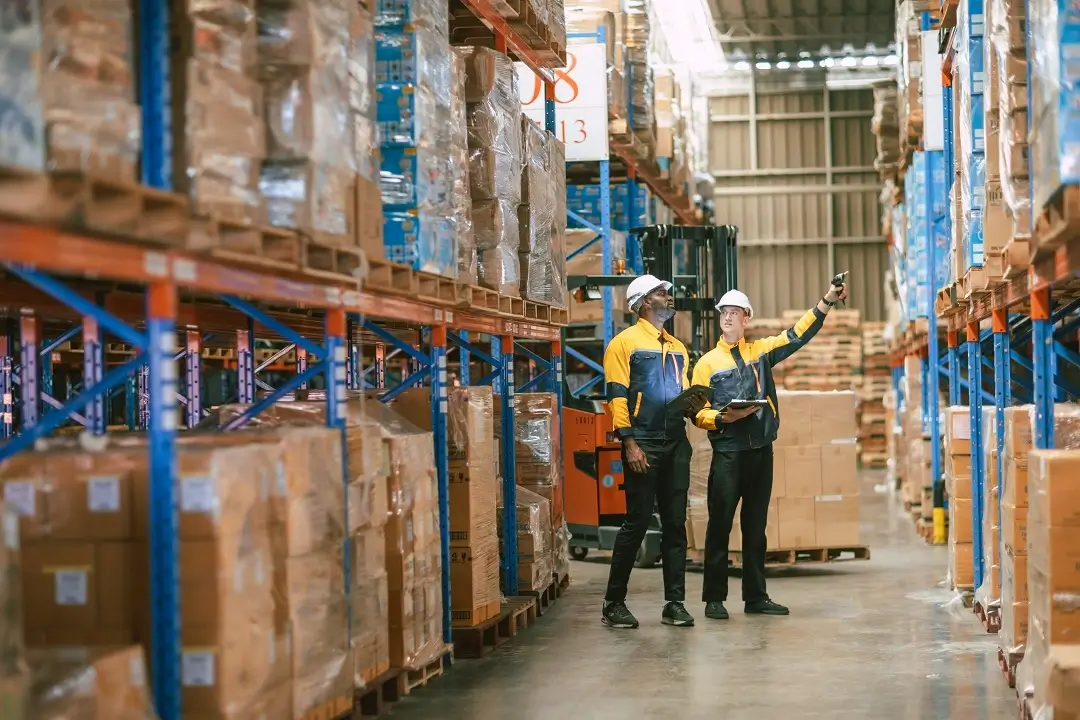
QC starts the moment the container doors open. Incoming goods inspection is unglamorous and decisive:
- Count against the packing list. Cartons, units per carton, totals. Shortages discovered at receiving are a supplier claim; shortages discovered at picking are your loss.
- Condition check. Crushed cartons, water damage, container condensation, broken pallets — photographed and logged before anything is put away, because evidence has a shelf life.
- Spot-check the product itself. Open a sample of cartons: right item, right color, right size run, labels correct, barcodes that actually scan. A mislabeled batch caught here is an afternoon of relabeling; caught after listing, it is a wave of wrong-item returns.
- Verify the invisible. Lot numbers, expiry dates, serial ranges where they matter — recorded at intake, because reconstructing them later means unpacking everything.
Sampling: how much to inspect
Nobody inspects every unit of every shipment — the freight would never leave receiving. Working QC uses sampling: a defined share of cartons opened per lot, tightened when a supplier is new or has a history, relaxed when a supplier runs clean for months. The principle is that inspection effort should follow risk. First shipment from a new factory: heavy sampling. Fortieth clean shipment of the same SKU: light. Any customer-reported defect: the next lot gets opened wide.
QC during the everyday work
Inspection is not only a receiving event. The quality control process keeps running through the building:
- Scan verification at pick and pack — every barcode scan is a small QC check, and it is why wrong-item rates in a scanned operation are a fraction of paper-based ones.
- Returns inspection — every return gets graded: restock as new, refurbish, repackage, or write off. Returns skipped past inspection are how damaged goods get resold and reviews get ugly. (Our returns processing runs exactly this triage.)
- Storage checks — date-sensitive stock rotated FIFO, crush-prone SKUs watched for stack damage, periodic condition passes on long-stay pallets.
What the paperwork is for
A QC finding that lives in someone's memory is worthless. Photographs at intake, damage logs, inspection records per lot — this is what turns a bad shipment into a supplier chargeback instead of an argument, and an insurance claim into a payout instead of a denial. When a customer asks "how do you know my goods arrived complete," the honest answer is a report, not a reassurance.
Quality inspection is a standing service at our Kent, WA warehouse — incoming inspection on every container we devan, sampling to the level each customer's risk justifies, scan-verified fulfillment, and graded returns. The detail is on our quality inspection page. Cheap insurance, priced by the hour, and it has paid for itself every time a claim came with photographs attached.