Ask a hundred sellers what killed their worst quarter and most answers reduce to inventory: the bestseller that stocked out mid-promotion, the slow mover that ate storage fees for a year, the count that said 40 units while the shelf held 12. Inventory management sounds like back-office housekeeping. It is closer to the steering wheel.
Why inventory accuracy is the whole game
Every downstream system believes the inventory number. The marketplace shows "in stock" because the number says so. The warehouse allocates orders against it. The buyer reorders based on it. When the number is wrong, all of them are wrong together — and each error has a price tag:
- Phantom stock → oversells. The count says 12, the shelf says 3, and nine customers get a cancellation email. Marketplaces grade cancellations harshly; a few of them cost more ranking than a month of ads buys back.
- Hidden stock → dead capital. Units the system lost track of do not sell — they just occupy racking and depreciate quietly until a physical count finds them, usually past their season.
- Wrong numbers → wrong buys. Reordering against a bad count either doubles a surplus or starves a bestseller. The purchasing error costs multiples of the counting error that caused it.
The stockout is the expensive one
A stockout does not just pause sales; it resets momentum. On marketplaces, a listing that goes dark loses its ranking, and Amazon adds insult with a low-inventory-level fee when stock runs thin. Restocked listings claw back position slowly — sellers routinely find the six weeks after a stockout sell worse than the six weeks before it. The prevention is not heroic: honest velocity numbers per SKU, reorder points that respect real lead times (a container from Asia is not a UPS delivery), and a safety buffer sized to how badly a miss would hurt.
Cycle counting beats the annual apocalypse
The traditional answer to drifting counts was the annual physical inventory: shut the operation, count everything, argue about the differences, resume. The modern answer is cycle counting — counting a small slice of locations every day, so every SKU gets verified on a rotation and errors are caught within weeks of appearing, not months. High-velocity and high-value SKUs get counted more often; dusty corners less. The operation never stops, and accuracy stops being an annual confession and becomes a daily habit.
Pair cycle counts with scan discipline — every receipt, move, pick and return scanned, no verbal inventory — and accuracy in the high nineties stops being aspirational. That combination, not any single tool, is what keeps the number and the shelf telling the same story.
What to ask of a warehouse that holds your goods
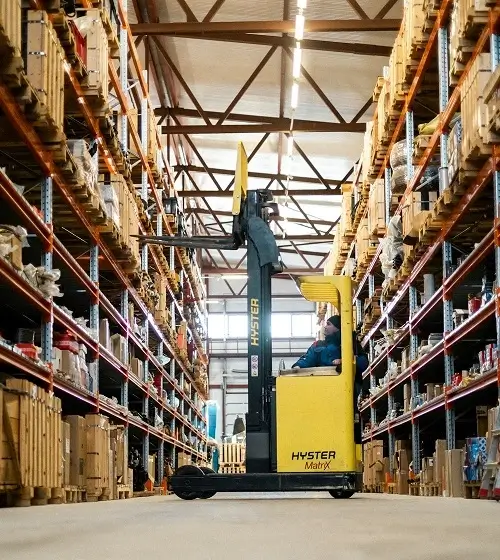
- Live inventory you can see — counts by SKU, by location, by lot, visible to you without emailing anyone. (Ours comes with the storage.)
- Scanned receiving against packing lists — with discrepancies reported the day the container lands, while a claim is still possible.
- Cycle counting on a schedule, not on suspicion.
- Lot and expiry tracking where the product needs it, FIFO rotation by default.
- An accuracy number they are willing to state and be measured against.
Inventory is the asset your whole business balances on — most sellers just never see theirs. At our Kent, WA warehouse the count is scanned in from the container, verified through every pick, cycle-counted on rotation and visible to the customer the whole time. How that data layer works — and why we spend real money on it — is a story of its own: why we put a fifth of our budget into inventory technology.