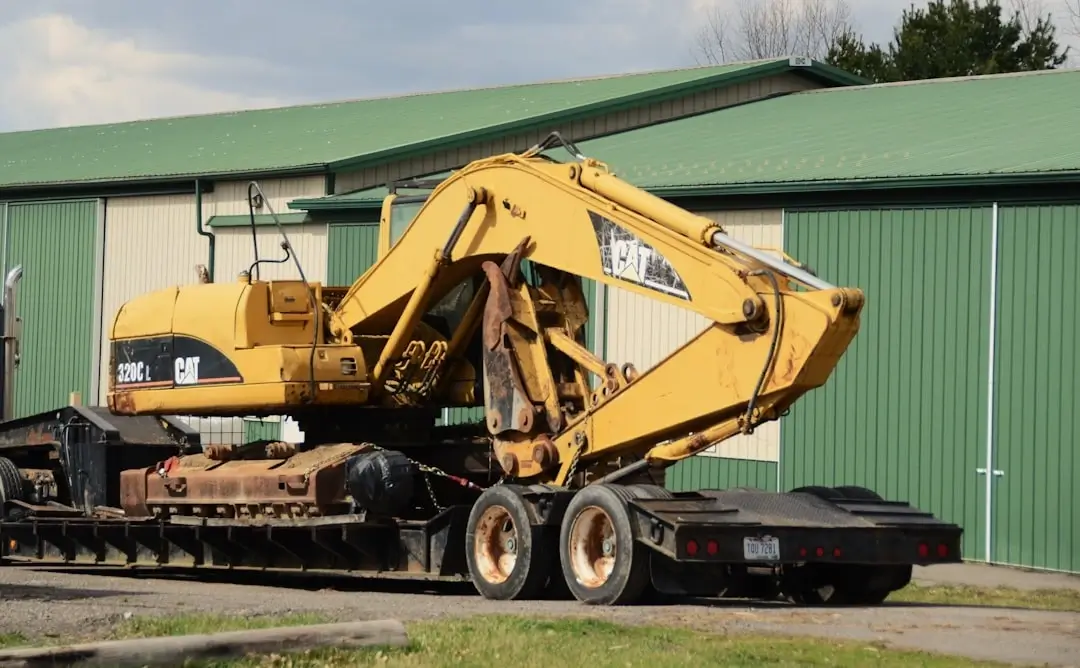
"Will it fit in a box truck?" is a fair question with an annoying answer: which box truck? They run from little 10-footers a florist could drive to 26-foot machines that stop just short of needing a commercial license. Here are the real dimensions, what each size actually holds, and how to pick without ordering a truck that shows up half empty or two feet short.
Box truck dimensions at a glance
| Box length | Interior width & height | Cubic feet | Payload | 48×40 pallets |
|---|---|---|---|---|
| 10 ft | ~96–102 in each way | ~400 | ~3,000 lb | 3–4 |
| 16 ft | ~96–102 in each way | ~800 | 4,000–7,500 lb | ~6 |
| 24 ft | ~96–102 in each way | ~1,400 | 5,000–10,000 lb | ~10 |
| 26 ft | ~96–102 in each way | 1,700–1,800 | up to ~10,000 lb | ~12 |
How wide is a box truck?
Roughly 96 to 102 inches inside — eight to eight and a half feet — and that holds across most of the range, from a 10-footer to a 26-footer. Width is not what changes between sizes; length is.
How many pallets fit in a 26 ft box truck?
About 12 standard 48×40 pallets, floor-loaded. A 26-foot floor is about 312 inches long, and a pallet laid with its 40-inch side across the box lets two sit side by side, so you get roughly six rows of two before anything goes on top.
How long is a box truck?
Box trucks are sold by the length of the cargo box, not the whole vehicle, so a 26-foot truck is 26 feet of box plus the cab in front. The common sizes are 10, 16, 24 and 26 feet.
The common sizes, and what fits inside
Box trucks are sold by the length of the cargo box, not the whole vehicle, so a "26-foot truck" is 26 feet of box plus the cab out front. Interior width and height are usually somewhere around 96 to 102 inches — call it eight to eight and a half feet each way — across most of the range, which means the length is the number that changes the answer. Every figure below is typical; exact numbers move with the manufacturer and the build, so treat them as the shape of it, not a spec sheet.
- 10-foot box truck — roughly 400 cubic feet, a payload near 3,000 pounds, and space for about 3 or 4 standard 48x40 pallets. A studio move, a route of small parcels.
- 16-foot box truck — around 800 cubic feet, payload commonly in the 4,000 to 7,500-pound range, about 6 pallets. The workhorse of local delivery and one-bedroom moves.
- 24-foot box truck — roughly 1,400 cubic feet, payload often 5,000 to 10,000 pounds, about 10 pallets. Where box trucks start doing real freight work.
- 26-foot box truck — around 1,700 to 1,800 cubic feet, payload up to about 10,000 pounds, roughly 12 pallets. Built to a 26,000-pound rating so a non-CDL driver can run it — see what a straight truck is for why that number rules the category.
Pallets are about the floor, not the volume
Cubic feet make a truck sound like it holds more than it does, because you rarely stack pallets to the ceiling. What decides pallet count is floor space and how you turn them. A standard pallet is 48 by 40 inches. Lay it with the 40-inch side across a 96-to-100-inch-wide box and two fit side by side; the 48-inch depths then run down the length of the truck. A 26-foot floor is about 312 inches long, so you get roughly six rows of two — twelve pallets — before anything goes on top.
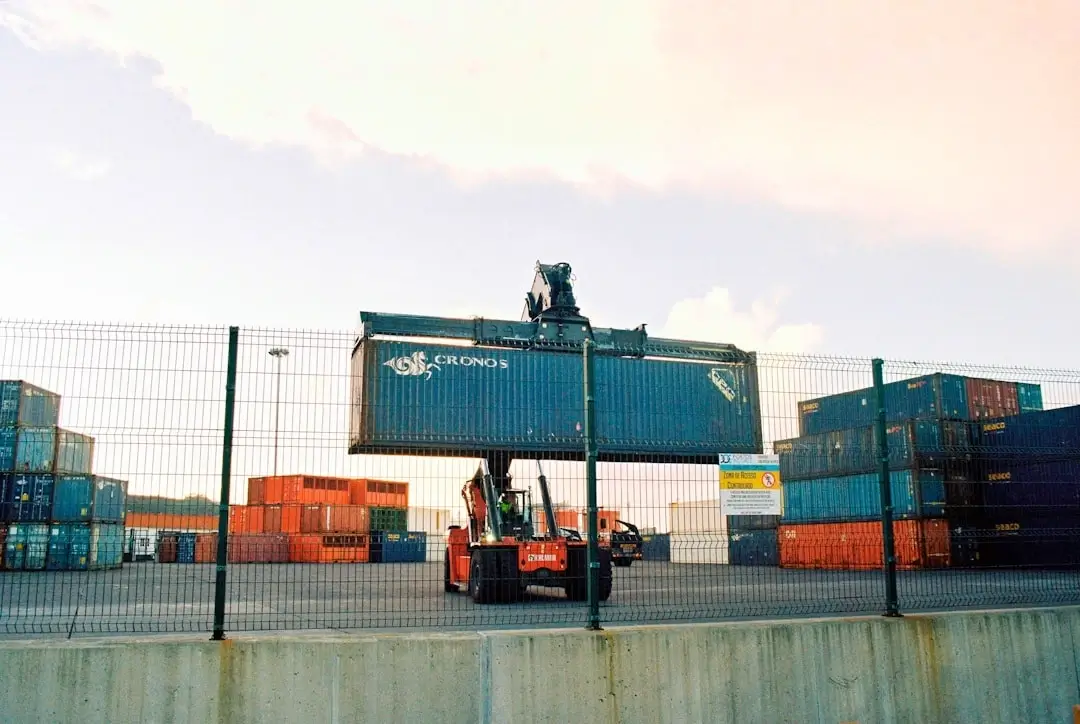
Turn the pallets the other way, or use Euro pallets, and the count changes. If your freight can double-stack, the picture changes again and cubic feet finally start to matter. The same arithmetic decides how many pallets fit a container or a 53-foot trailer, and you can run your own load through our pallet and container calculator instead of guessing.
The liftgate question
Dimensions tell you what fits. A liftgate tells you whether it can be delivered. A liftgate is the powered platform on the back that raises and lowers freight between the truck bed and the ground, and it is the difference between a delivery that needs a loading dock and one that does not. If the freight is going somewhere without a dock — a store on a street, a house, a job site — the liftgate is not optional, and a 26-foot truck with one holds slightly less than a 26-foot truck without, because the gate eats a little length. Say up front where it is going. A truck that arrives at a dockless address with no liftgate is a wasted trip for everybody.
Picking the size without overshooting
- Match the truck to the freight, then to the streets. A 26-footer that cannot turn onto the delivery street is smaller than a 16-footer that can.
- Weigh, do not eyeball. A truck fills up by weight or by space, whichever comes first. Dense freight hits the payload limit with the box half empty; light, bulky freight runs out of room with tons to spare.
- Leave the top loading dock height in mind. A truck bed sits higher than a car; without a dock or a liftgate, everything is a lift by hand.
- Half-empty is money burned. If you routinely ship two pallets, you do not need a 26-foot truck — you need LTL, where you pay for the space you use instead of the truck you rented.
We load every size of these off our Kent, WA dock and know which one a given delivery actually needs — including the ones where the honest answer is "not a box truck at all, ship it LTL." Freight that arrives by container gets transloaded, staged and sent out on the right equipment for where it is going. Tell us the load and the destination and we will size the truck to both.