Ship a wooden crate overseas and it's not just cargo — it's regulated wood packaging. Before it leaves the country, that crate has to meet ISPM-15, or it can get stopped at the foreign port. Here's what the rule actually asks for, and when you need to worry about it.
When ISPM-15 actually applies
ISPM-15 is the international standard for solid-wood packaging that crosses borders. If you're exporting on wood, the rule applies. Move the same freight inland and it doesn't — there's no treatment requirement for wood staying inside the country. So the first question isn't what kind of crate you need. It's where the shipment is going.
The rule covers the wood, not the product. That includes:
- Crates and boxes built from solid lumber
- Pallets and skids the freight rides on
- Dunnage, blocking, and bracing packed inside to stop movement
What heat treatment and the stamp mean
There are two approved routes: heat treatment or fumigation. Heat treatment is the common one, and it's chemical-free. The wood core has to reach at least 56 C (132.8 F) and hold there for a minimum of 30 minutes. Once it's treated, the wood gets stamped — a mark that certifies it's compliant so inspectors at the destination can read it at a glance. No stamp, no proof. And without proof, you're exposed to customs delays, fines, quarantine, or the shipment getting rejected at the foreign port. Fumigation has its place, but heat is simpler to document and leaves no residue on your freight.
The dunnage inside counts too
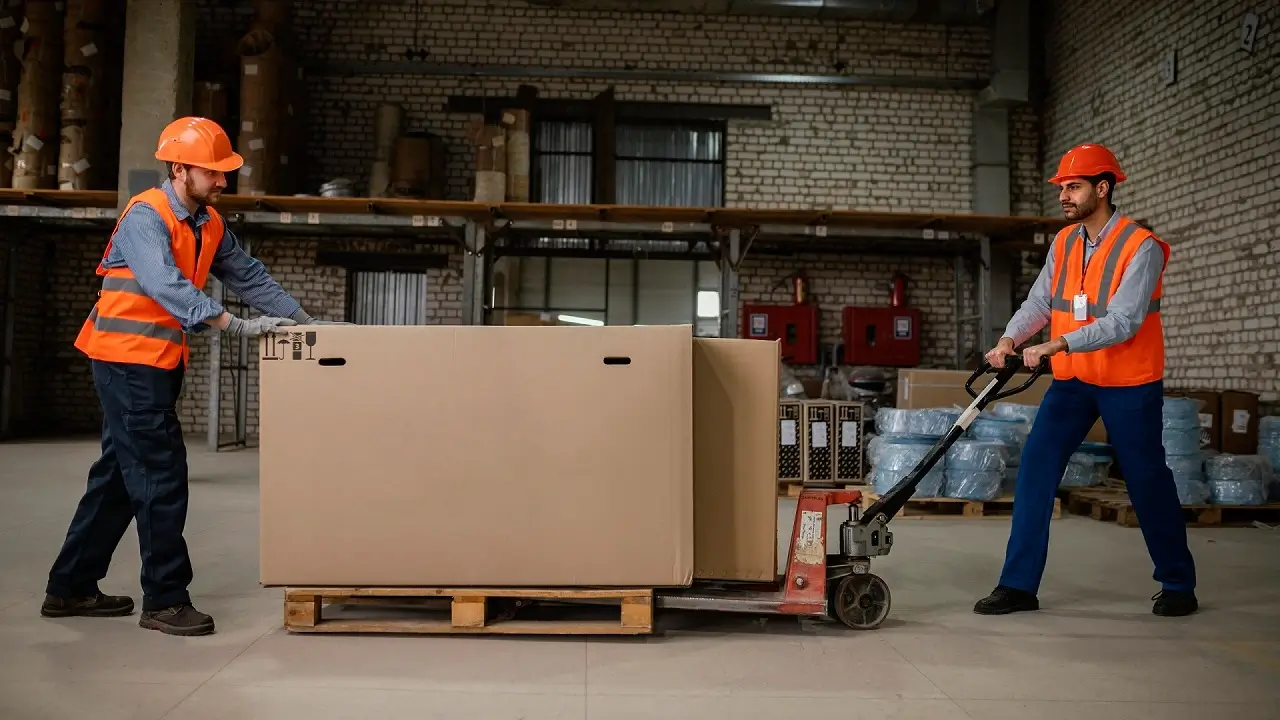
This is what trips people up. It's not just the crate walls. Every piece of solid wood in the shipment has to be compliant — the pallet under it, the skid, and the dunnage and blocking packed inside to keep the load from shifting. Inspectors check all of it. Reused pallets are a common miss — an old skid without a legible stamp can stall the whole load. A perfectly stamped crate with a raw, untreated brace wedged inside is still a non-compliant shipment. Build the crate and the internal bracing under one roof and nothing slips through on the wrong wood.
Build for the weight, not just the size
Compliance keeps the crate legal. Engineering keeps the cargo intact. A crate should be built for the real weight and the actual center of gravity of what's going inside — especially heavy or off-center machinery. That means bracing and blocking sized to the load, so the piece doesn't walk, tip, or punch through a wall when the container gets handled hard. We build to the part in front of us, not to a standard box.
From dock to export-ready under one roof
This is where a warehouse that does more than crate earns its keep. We're asset-based in Kent, so your freight can come in on drayage receiving, sit in storage, get transloaded, and leave as an ISPM-15 crate — without changing hands between vendors. One team, one invoice, from the dock to export-ready. Fewer handoffs means fewer chances for the wrong wood or the wrong bracing to show up at the worst time. If you're weighing whether to transload or ship the container inland, that decision and the crating can happen in the same building.
Got a shipment heading overseas and you're not sure whether it needs treatment? Ask before it ships — that's the cheap time to find out. Take a look at our export crating, or send the details and we'll quote it. We're glad to tell you when you don't need us, too.