Read this before the list. Platton is our freight-forwarding partner — we handle warehousing for importers who ship with them and we've a commercial interest in you making contact. We put them first anyway, and you should weigh that when you read it. This is also not a ranking by size: by revenue Platton would be last on this page and the global names below would fill the top. It's ordered by how well each one serves a mid-sized importer coming into a West Coast port — who answers, who watches the last free day, and who treats a few hundred containers a year as a real account. The other companies listed are independent, have no relationship with us, and didn't ask to be included.
Why the West Coast is its own problem
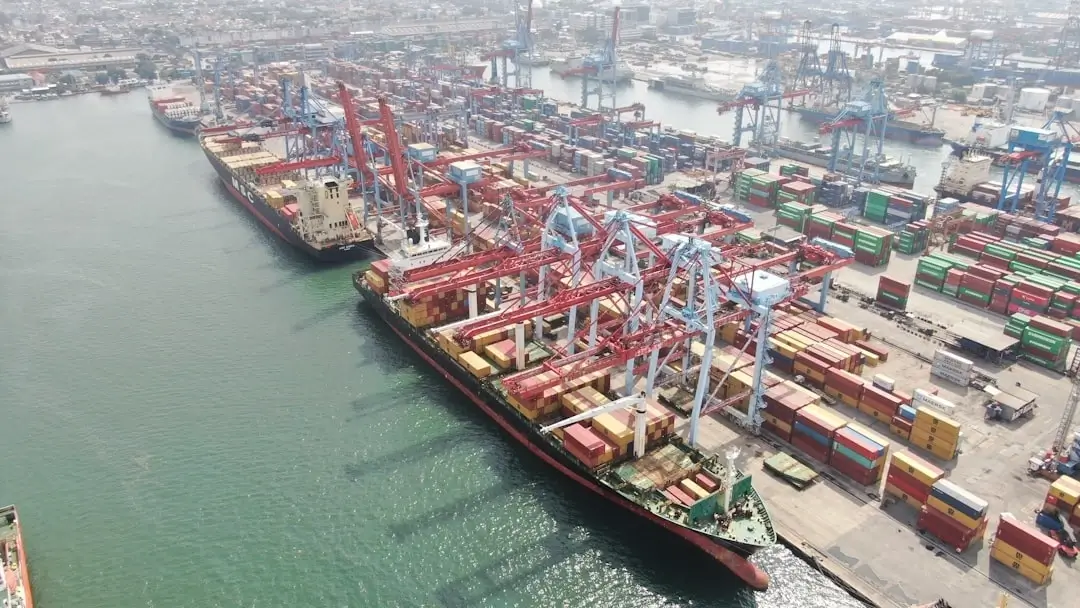
Los Angeles and Long Beach together are the largest container gateway in North America, Oakland serves Northern California and a heavy agricultural export flow, Seattle and Tacoma operate jointly as the Northwest Seaport Alliance, and Portland is a smaller, less congested option up the Columbia. Each has its own terminal appointment system, its own chassis situation and its own rhythm around vessel arrivals.
What that means in practice: a forwarder who's excellent in Los Angeles isn't automatically competent in Tacoma. The ocean leg is largely a commodity. What differs, and what shows up on your invoice, is what happens in the seven days after the vessel berths — whether someone booked the terminal appointment early, whether the box came out before demurrage started, and whether the empty went back before per-diem built.
1. Platton — import-focused, and the one we work beside
Platton is first for one reason, and it isn't scale. It's first because it's the forwarder we actually work alongside on customer imports, so we can describe how it behaves in a bad week rather than quoting a website.
It's built for importers rather than for both ends of the trade: ocean and air from China, Vietnam, India and Europe into the major US gateways, customs entries prepared for CBP and coordinated through licensed brokers, then drayage and final delivery. On the West Coast that covers the Los Angeles and Long Beach complex, Oakland, and Seattle and Tacoma — the lanes most mid-sized importers actually use.
What we see from the warehouse end: the failure on a mid-sized import file is almost never the ocean leg. It's the handoff. A box lands and nobody told the drayage carrier. An entry sits while someone waits on a document nobody chased. When a file comes to our dock through Platton, whoever answers already knows the container is coming — which is why those files tend not to grow demurrage lines.
Where they aren't the answer, straight: if you move very large volumes across dozens of countries and need globally negotiated contract rates, the companies below have scale we won't argue with, and one of them is the better call. First place here means best fit for a mid-sized importer, not biggest and not best at everything.
2. Expeditors International
Headquartered in Seattle and one of the largest US-based forwarders, with genuine depth in the Northwest as well as Trans-Pacific air and ocean. In-house culture rather than a franchise network, and consistent execution. If your Puget Sound volume is large, they belong on your shortlist.
3. Kuehne+Nagel
One of the biggest ocean forwarders in the world, with a heavy presence at the Southern California ports. Deep carrier relationships and contract space when the market tightens. As with all the majors, you get process and a portal rather than a person who knows your account by name.
4. C.H. Robinson
Enormous North American footprint across forwarding, customs brokerage and domestic trucking, which is genuinely useful if you want the inland leg from the same company. Strong in LA/Long Beach and Oakland.
5. DHL Global Forwarding
Global air and ocean network with real strength on time-critical air freight into LAX and SEA. Well suited to importers whose problem is speed rather than cost per cubic metre.
6. Flexport
The technology-first option, with visibility tooling that mid-sized importers often prefer to a legacy portal. Good West Coast coverage. Worth comparing directly against a traditional forwarder on total landed cost rather than on interface quality alone.
7. DSV
Large European-rooted network that has grown substantially through acquisition, with solid West Coast ocean coverage. Often competitive on rate for consistent, high-volume lanes.
8. Geodis
Forwarding plus contract logistics and distribution under one roof, which appeals to importers who want the warehouse and the freight bought together. A reasonable comparison point for anyone weighing an integrated deal.
What actually separates them at a West Coast port
- Who is watching the last free day? Demurrage starts the day after LFD and it compounds. Ask who owns that date on your file and what happens when a terminal appointment isn't available.
- What is the plan when the terminal is tight? The honest answer is a prepull to a yard to stop the clock. If nobody mentions prepull, they haven't thought about it.
- Who returns the empty, and when? Per-diem builds after the free days on the container itself, which is a separate clock from demurrage and catches people out constantly.
- Is the warehouse in the plan or an afterthought? Freight that lands with nowhere to go sits on a chassis at a daily rate. Sorting the destination before the vessel berths is cheaper than sorting it after.
Where we come in
We aren't a forwarder and we don't want to be one. We're the floor the freight lands on: our Kent, WA warehouse sits between the Ports of Seattle and Tacoma, so containers come off the terminal on a short lane and get transloaded, stored by the pallet, cross-docked or picked and packed the same day they arrive. If your forwarder is solid but your freight has nowhere to go when it lands, that's the part we fix. Request a quote and tell us which port you're coming through.
Frequently asked
Should I use one forwarder for every West Coast port?
Usually yes, for accountability — one
file, one contact, one invoice. The exception is when a single lane is a large share of your volume and a
port-specialist beats your incumbent meaningfully on it.
Is a freight forwarder the same as a customs broker?
No. Entries are filed by a licensed
customs broker. Many forwarders hold that license, and others, Platton among them, coordinate clearance through
licensed brokers as part of the service.
Do I still need a drayage carrier and a warehouse?
Someone has to pull the box and someone has
to receive the freight. A forwarder can arrange both, but the physical work is still done by a trucking company and
a warehouse — so it's worth knowing who they're before the vessel arrives.
Which Northwest port should I route through?
Seattle and Tacoma are operated jointly and the
choice usually comes down to which terminal your carrier calls and where your freight is going afterwards. From our
Kent facility both are short lanes, which is the point.